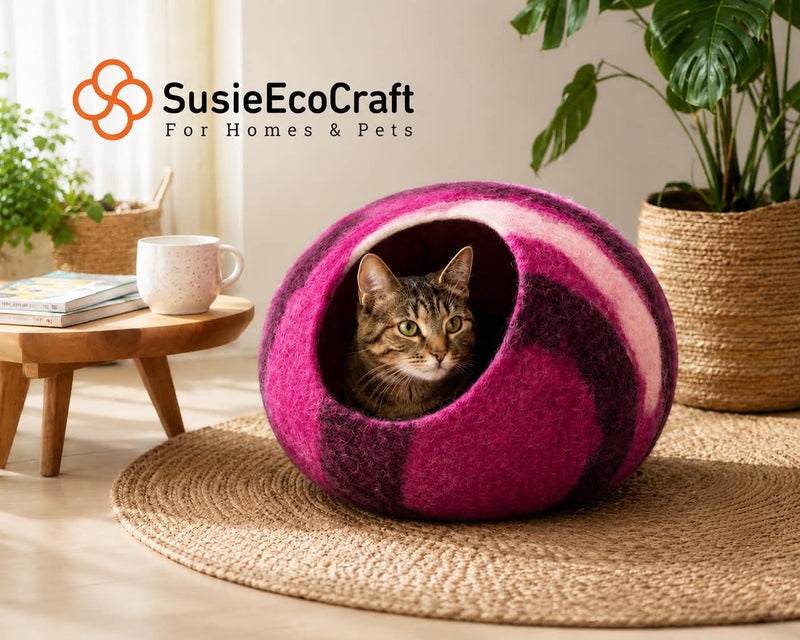
Wool Felt Cat Cave Australia: Guide to Eco-Friendly Cat Beds and Wool Dryer Balls
Share
If you’re searching for a wool felt cat cave in Australia or exploring wool dryer balls as a sustainable laundry upgrade, you’re likely trying to solve two problems at once: creating a healthier home for your cat and reducing household waste.
This guide explains both in depth, how they work, whether they’re worth it, and how Australian households are using them to move toward a more eco-conscious lifestyle.
At SusieEcoCraft, these products sit at the intersection of sustainability, craftsmanship, and everyday practicality: handmade wool cat caves for pet comfort and reusable wool dryer balls for low-waste laundry systems.
Why This Matters Now in Australia
Australia is experiencing a clear shift toward low-waste, non-toxic household products driven by:
- Rising household energy costs (especially dryer usage)
- Growth of the zero-waste movement
- Increased concern over synthetic microfibres
- Pet owners prioritising natural materials for animal wellbeing
Wool-based products like cat caves and dryer balls are gaining traction because they solve two modern problems:
- Reducing synthetic waste (plastic-based pet beds, disposable dryer sheets)
- Improving home comfort without chemicals or artificial fragrances
Key Takeaway:
Wool felt cat caves and wool dryer balls are not “trendy eco items”—they are functional household upgrades aligned with Australia’s shift toward sustainable living.
Wool Felt Cat Caves Explained (Australia Edition)
What Is a Wool Felt Cat Cave?
A wool felt cat cave is a semi-enclosed cat bed made from compressed natural wool fibers. It creates a warm, breathable, cave-like structure that mimics a cat’s instinctive need for enclosed, secure resting spaces.
In Australia, they are especially popular because they remain comfortable in both cool winters and mild indoor climates due to wool’s natural temperature regulation.
Direct Answer (40–60 words):
A wool felt cat cave is a handmade cat bed made from compressed natural wool. It provides insulation, breathability, and a secure enclosed space for cats. Unlike synthetic beds, it is chemical-free, durable, and naturally odor-resistant, making it ideal for eco-conscious Australian pet owners.
Why Cats Instinctively Love Wool Felt Cat Caves
Cats are biologically wired to seek:
- Enclosed sleeping environments
- Warm, insulated surfaces
- Elevated comfort zones
- Low-stress hiding spaces
Wool felt supports all four.
Expert Insight: Feline Behaviour and Enclosed Spaces
Cats often choose enclosed beds because they reduce environmental stimulation. Wool felt caves provide “pressure-free insulation,” helping anxious or senior cats feel more secure compared to open beds.
Benefits of Wool Felt Cat Caves in Australian Homes
1. Natural Temperature Regulation
Wool adjusts to ambient temperature keeping cats warm in winter and comfortable in mild Australian summers.
2. Chemical-Free Materials
High-quality wool caves are typically made using soap, water, and compression only, avoiding synthetic adhesives or plastics.
3. Odor Resistance
Wool naturally resists odor buildup, reducing the need for frequent washing.
4. Durability Over Time
Dense felting prevents rapid flattening compared to polyester beds.
5. Low Maintenance Cleaning
Most can be cleaned by vacuuming or spot cleaning.
What Most People Miss About Cat Caves
Many buyers focus only on aesthetics, but the real value is behavioral:
- Cats using enclosed beds often display reduced stress behaviors
- They sleep longer in structured, enclosed environments
- They are less likely to over-groom when stress is reduced
Common Mistakes When Buying Cat Caves
- Choosing loosely felted wool (causes shedding and breakdown)
- Buying dyed synthetic blends disguised as “eco wool”
- Ignoring size (too small caves reduce usage)
- Over-washing (damages fiber structure)
Strategic Consideration:
Dense felting quality matters more than design. Poorly made caves degrade quickly and lose their structural “den effect.”
Wool Dryer Balls Explained
What Are Wool Dryer Balls?
Wool dryer balls are reusable felted wool spheres placed in a dryer to improve airflow between clothes. They reduce drying time, soften fabrics naturally, and eliminate the need for single-use dryer sheets.
Direct Answer (40–60 words):
Wool dryer balls are reusable felted wool spheres used in dryers to separate clothes, improve airflow, and reduce drying time. They naturally soften fabrics, reduce static, and eliminate chemical-laden dryer sheets, making them a sustainable laundry solution for Australian households.
How Wool Dryer Balls Work
When placed in a dryer, they:
- Physically separate clothes
- Increase air circulation
- Absorb small amounts of moisture
- Reduce fabric clumping
This leads to faster, more efficient drying cycles.
Proven Benefits for Australian Households
Based on real-world usage and product testing insights:
1. Faster Drying Time
Studies and product testing suggest drying time can be reduced by improving airflow efficiency inside the drum.
2. Lower Energy Consumption
Shorter drying cycles mean reduced electricity use important in Australia where energy costs are rising.
3. Chemical-Free Fabric Softening
No synthetic fragrances or coating agents are required.
4. Long-Term Cost Savings
Unlike dryer sheets, wool dryer balls last hundreds of loads.
5. Reduced Static and Wrinkles
Improved fabric separation reduces static buildup.
Expert Insight: Why Wool Outperforms Synthetic Alternatives
Synthetic dryer sheets coat fabrics with chemicals that reduce static but also reduce absorbency (especially in towels). Wool dryer balls work mechanically instead of chemically, preserving fabric performance over time.
What Most People Miss About Dryer Balls
- They don’t “replace” sunlight dryingthey complement it
- They are most effective in medium loads, not overstuffed dryers
- Their performance improves when multiple balls are used per load (3–6 recommended)
Wool Felt Cat Caves vs Dryer Balls (The Connection)
While they serve different purposes, both products reflect the same material philosophy:
- Natural wool over synthetics
- Reusable over disposable
- Long-term cost efficiency over short-term convenience
| Feature | Wool Felt Cat Cave | Wool Dryer Balls |
|---|---|---|
| Primary Use | Pet comfort | Laundry efficiency |
| Material | Felted wool | Felted wool |
| Lifespan | Years | Hundreds of loads |
| Eco Impact | Low waste | Replaces dryer sheets |
| Maintenance | Spot clean | Air dry / occasional wash |
Real-World Scenarios in Australia
Scenario 1: Apartment Living in Sydney or Melbourne
Limited drying space → dryer balls reduce cycle time and energy use.
Scenario 2: Rural or Coastal Homes
Humidity affects drying → wool dryer balls improve airflow efficiency.
Scenario 3: Multi-Cat Households
Cats prefer enclosed calm spaces → cat caves reduce stress and furniture scratching.
Scenario 4: Zero-Waste Households
Both products eliminate disposable alternatives entirely.
30–60–90 Day Eco Transition Plan
First 30 Days
- Replace dryer sheets with wool dryer balls
- Introduce cat cave as primary sleep space
60 Days
- Reduce synthetic pet bedding
- Optimize laundry loads for dryer efficiency
90 Days
- Fully transition to reusable laundry system
- Expand sustainable home product lineup
Common Mistakes to Avoid
- Expecting dryer balls to completely replace line drying
- Choosing low-density felt cat caves
- Overwashing wool products
- Overloading dryers (reduces airflow efficiency)
Advanced Insights (Sustainability Perspective)
Wool products outperform synthetics in lifecycle sustainability because:
- Wool is biodegradable
- Requires less frequent replacement
- Has lower microplastic pollution impact
- Reduces dependency on petroleum-based materials
Strategic Consideration:
The real value is not just “eco-friendly branding”—it is lifecycle economics: fewer replacements, lower waste, and reduced long-term cost per use.
FAQ (Australia-Focused)
1. Are wool felt cat caves safe for cats?
Yes. High-quality wool caves are non-toxic, breathable, and chemical-free when properly made.
2. Do cats actually use cat caves?
Most cats prefer enclosed spaces due to instinctive security behavior.
3. Do wool dryer balls really reduce drying time?
Yes, they improve airflow and reduce fabric clumping, which speeds up drying.
4. How many dryer balls should I use?
Typically 3–6 depending on load size.
5. How long do dryer balls last?
Often hundreds of loads over 2–5 years.
6. Do dryer balls work in humid Australian climates?
Yes, they are especially useful when humidity slows drying.
7. Can wool cat caves be washed?
Spot cleaning is recommended; full washing is rarely needed.
8. Are these products better than synthetic alternatives?
For sustainability, durability, and safety, yes.
When Professional or Premium Products Make Sense
You should consider higher-quality handmade wool products when:
- Your pet is sensitive or anxious
- You want long-term durability
- You are reducing household waste
- You want chemical-free materials in your home
This is where handmade craftsmanship, like that offered by SusieEcoCraft, becomes especially relevant because density, felting quality, and material sourcing significantly impact performance.
Conclusion
Wool felt cat caves and wool dryer balls represent a practical shift in how Australian households approach sustainability:
- Better for pets
- Better for laundry efficiency
- Better for long-term household costs
- Better for the environment
For eco-conscious shoppers, they are not niche products they are foundational upgrades to a lower-waste home.
If you're exploring sustainable home and pet essentials, SusieEcoCraft offers handmade wool products designed for durability, comfort, and everyday use.